How this site was made.
We build websites for clients, so our own site is the first one we point to. This is the build, step by step: a 3D film made entirely from code, a full redesign on an existing site, and the calls we got wrong along the way.
The brief
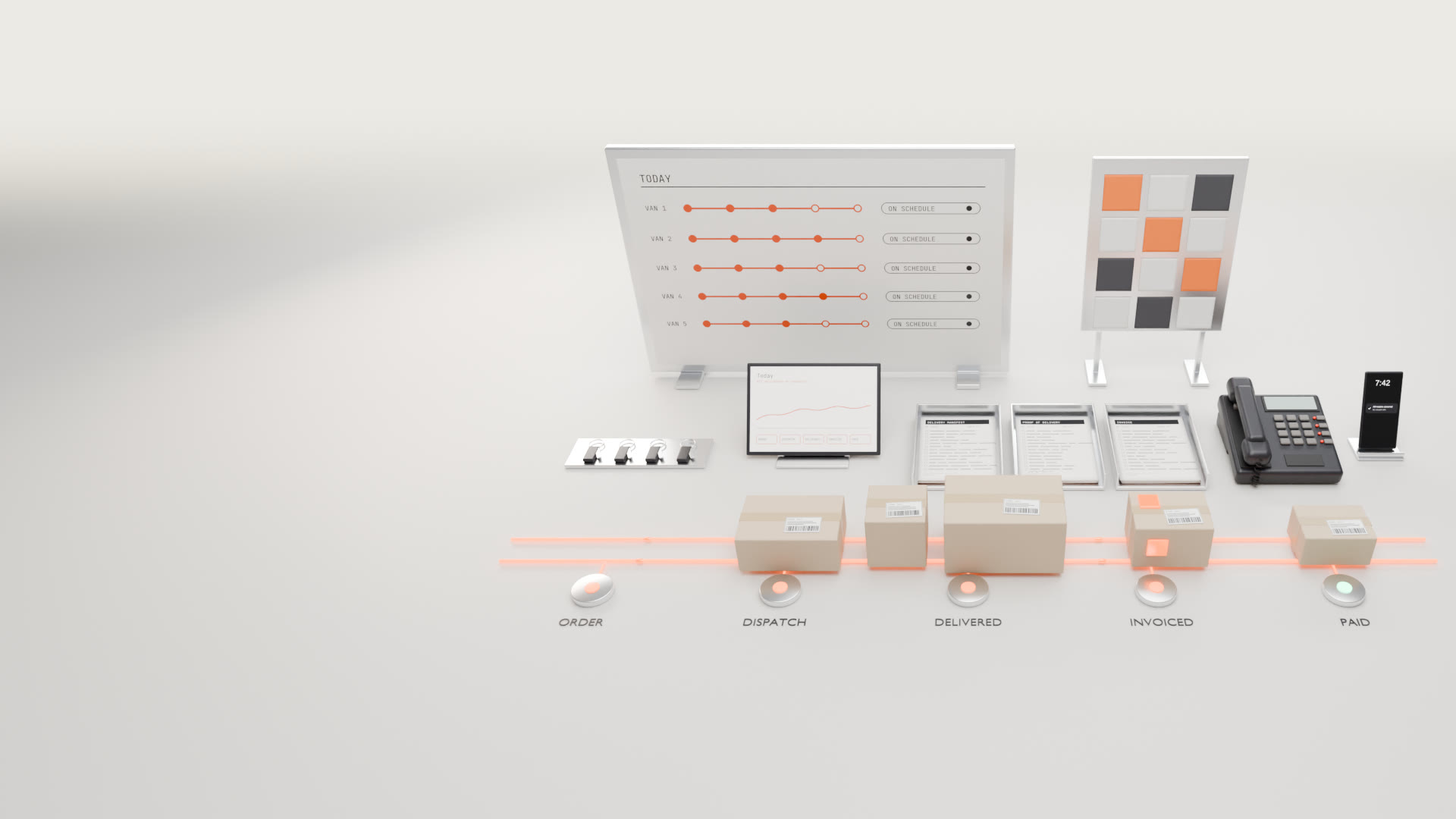
Show, without a word of explanation, what we do: take a business where work is scattered across disconnected tools and turn it into one system that runs.
The owner asked for realistic 3D, full motion that plays on its own so nobody has to scroll to understand it, and a result good enough to be the portfolio piece for our website work.
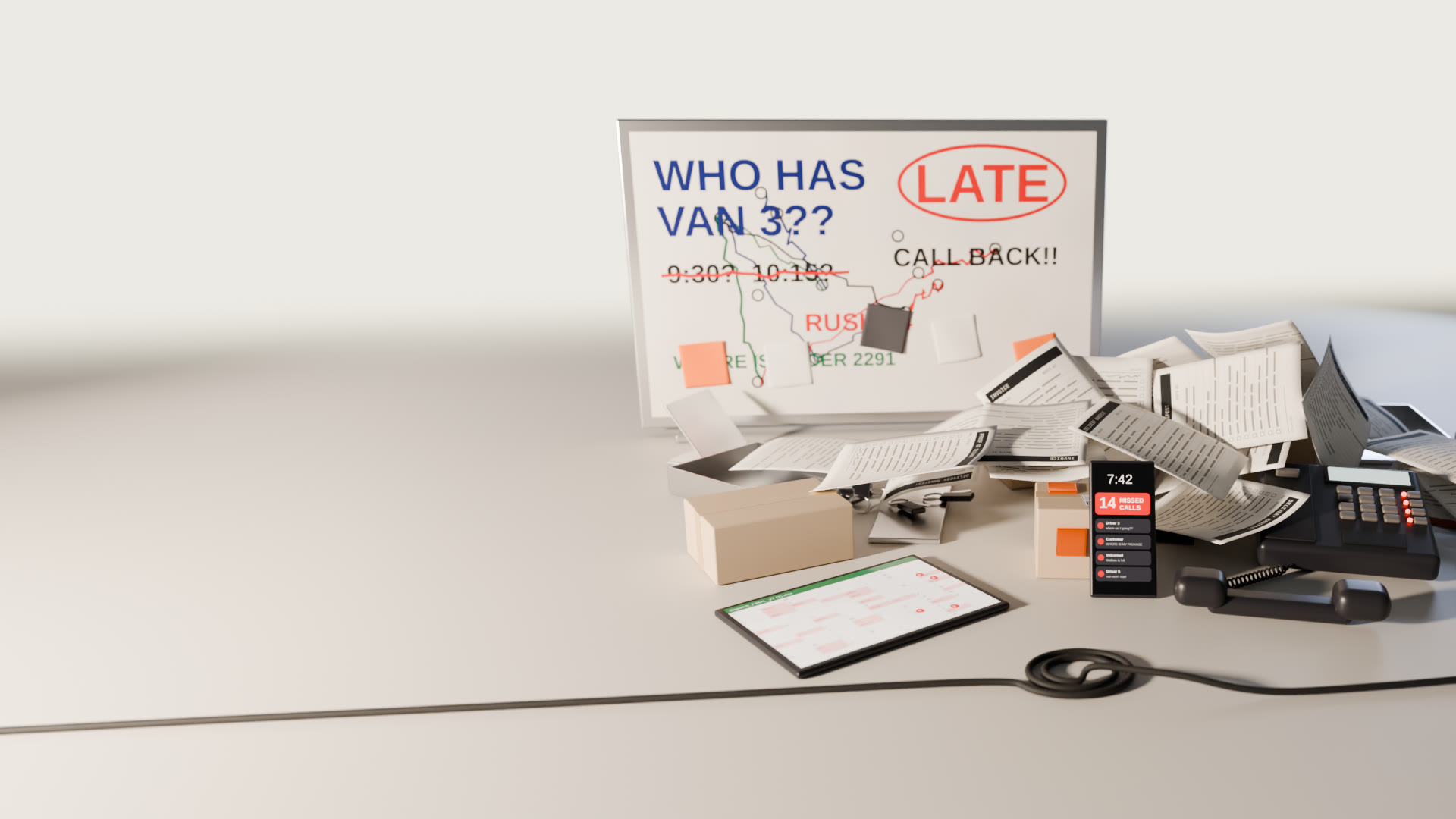
We chose one concrete story over an abstract one: a same-day courier dispatch desk on a bad morning. Loose manifests, a phone that will not stop ringing, a whiteboard asking who has van 3. Then relief. The site speaks to every kind of business, but a specific story is easier to believe than a diagram.
The build, in order
A scene written as code
The whole film is generated by Python scripts driving Blender. There is no hand-built scene file. Every prop, from the parcels to the desk phone, is created by a function, which means any object can be changed in a line and the film re-rendered.
A planned route for every object
Each object has a place in the mess and a place in the finished system, and a planner works out a route between the two. Sheets peel off the pile into stacks, the furniture glides home, and the stacks drop into their trays.
Nothing passes through anything
The owner’s rule for the film was that every object is a physical thing. Before any final render, a separate check rebuilds all 450 frames and tests every moving object against everything around it. The film on the homepage passed with zero overlaps.
Looks judged as real frames
We rendered the same moments in several color directions and chose from finished frames instead of arguing over swatches. The same scripts produce every version, so changing the look of the film is a setting, not a rebuild.
Previews before final renders
Every change was judged on stills and quick low-resolution previews first. The full-quality frames were rendered on RunPod cloud graphics cards only once the story, the framing and the timing were settled.
A film that never blocks the message
The headline and the button are on screen from the first second. The film plays once and rests on the finished system. Visitors who prefer reduced motion, or who are saving data, get the final still and no video.
Re-framed for a full screen
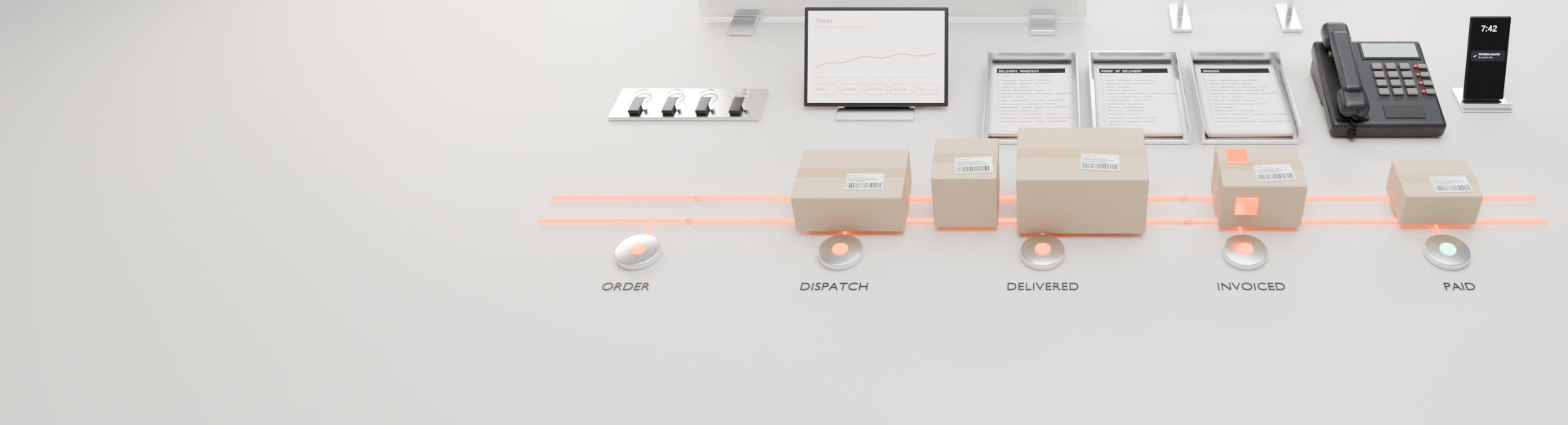
The first camera filled the frame edge to edge, which left nowhere for a headline. We widened the lens and shifted it, so the picture gained a quiet third on the left without moving a single prop.
The same engine underneath
The redesign kept what already worked: the AI assistant, the search groundwork, the pre-rendered pages and the hosting. A new look does not have to mean a rebuild.
What we got wrong
A case study that only shows the wins is an advertisement. These are the notes that changed the work.
The phone looked like a calculator
The first desk phone was a slab with a keypad. It read as a ten-key calculator. We rebuilt it with a handset, cradle, display, line lamps and a coiled cord.
Nobody uses walkie-talkies
The first version had a two-way radio on the desk. It dated the scene by twenty years. It became a smartphone with a wall of missed calls.
The ending was decoration
The page used to close on faint concentric rings and two equal buttons. The owner called it generic, and he was right. It now ends where the film ends: the ordered desk, one sentence and one button.
The first finished look was a template
The first complete version was dark stone with gold type. It was polished, and it looked like a hundred other sites. We rebuilt the film and every page in daylight: bone paper, black ink and one orange.
The rule we took from all of them: every object has to be instantly recognizable, and nothing on the page is there just to fill space.
Want a site built like this?
Standard websites start at $1,500. Flagship sites like this one start at $5,000. Either way it begins with a free conversation about what the site has to do for your business.